Building for the background: field notes on the clinical-tech gap from ViVE 2026

.webp)
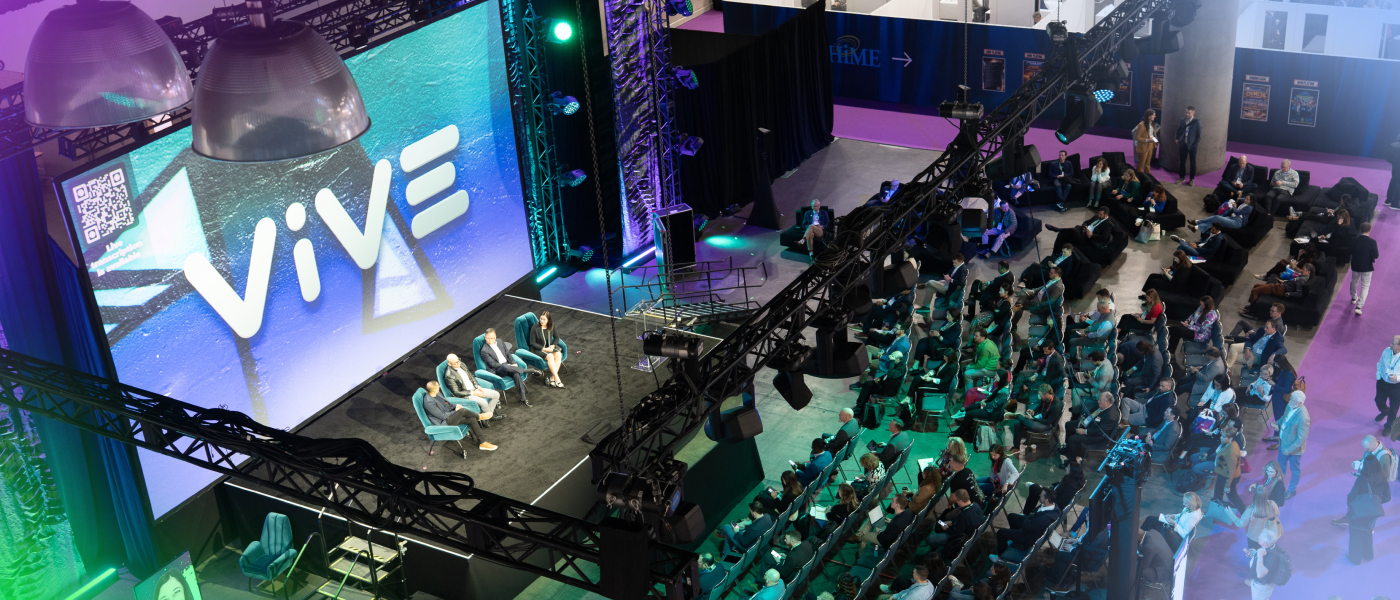
From February 22 to 25, our team traveled to Los Angeles for ViVE 2026. And yes, the event delivered on the full digital health spectacle: oversized booths, policy-heavy conversations, enough swag to test every suitcase zipper, and, somehow, an infomagician doing a product demo for eFax (which we absolutely loved). There were smoothies, snacks, and even free sponsored Uber rides back to the hotel.
But once the novelty wore off, something more useful kicked in. ViVE is one of those places where you can feel the gap between a company’s pitch and its actual market position. The talks, panels, and side conversations gave us a strong read on the themes shaping digital health right now.
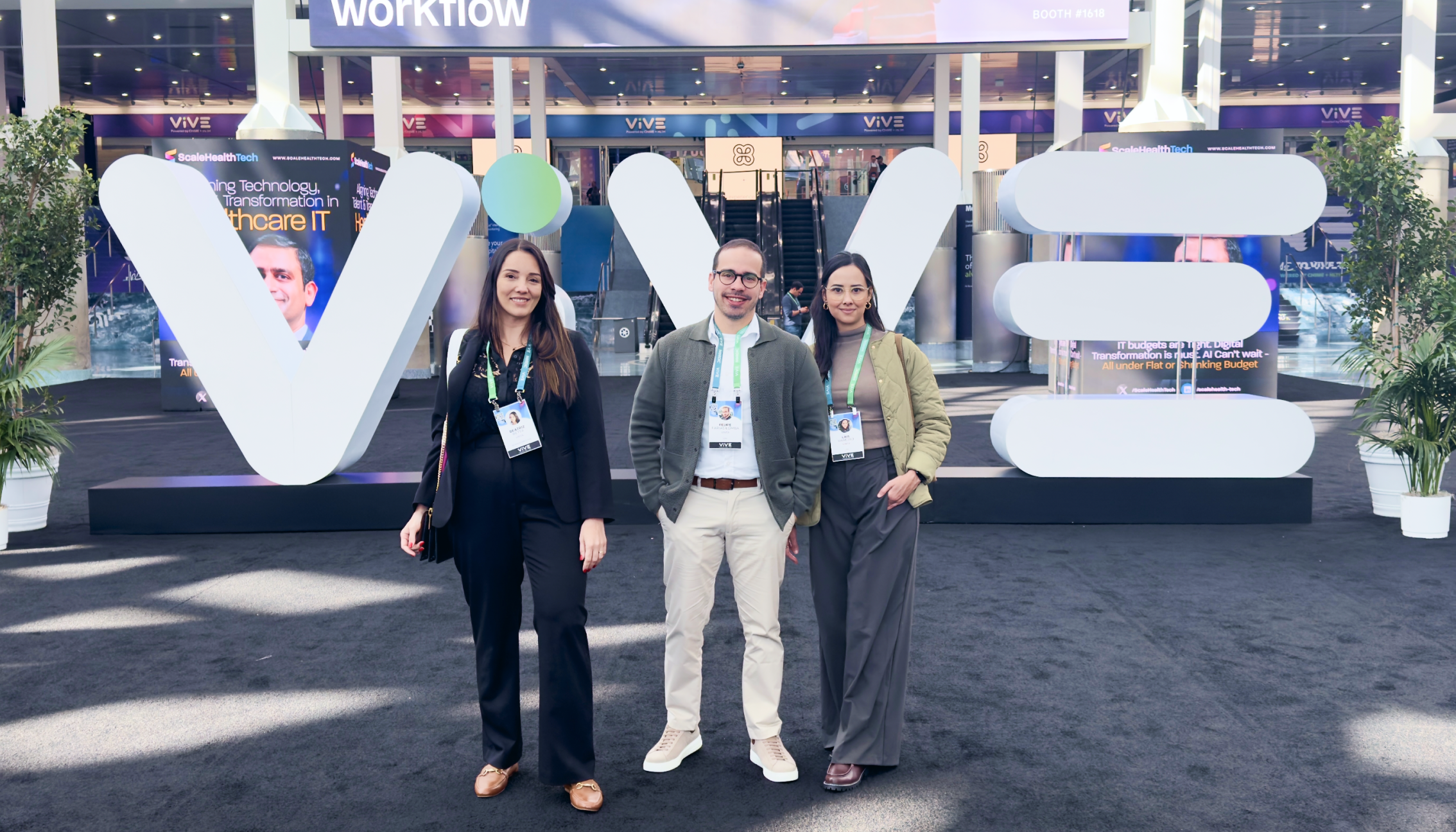
The show floor added a different kind of signal: it helped us understand who felt dev-friendly, who felt sales-led, which products looked mature, and which conversations had real substance. Those are the kinds of signals you do not get from a website, a deck, or a desk-research sprint.
It was also impossible to ignore the mood beneath all the product energy. Across sessions and booth conversations, one tension kept resurfacing: healthcare is moving fast, but the people delivering care are already overloaded.
That mix is what stayed with us. ViVE was fun, noisy, and full of big claims. It was also one of the clearest reminders we have had in a while that the most useful healthtech is rarely the loudest. Among everything we saw and heard at ViVE, these were the takeaways that felt most relevant to us.
Healthtech products fail when clinicians are not shaping them
One of the clearest messages across the clinical tracks was frustration with technology that adds yet another layer of burden and cognitive load, rather than making care easier to deliver.
For a product to work in healthcare, clinicians cannot be treated as downstream end users who simply adapt to what a product team builds. They need to be involved as co-creators. We see this often in our own client work: if a solution is not clearly saving time, reducing friction, or supporting better decisions at the point of care, it usually becomes one more source of cognitive load in an already overloaded environment.
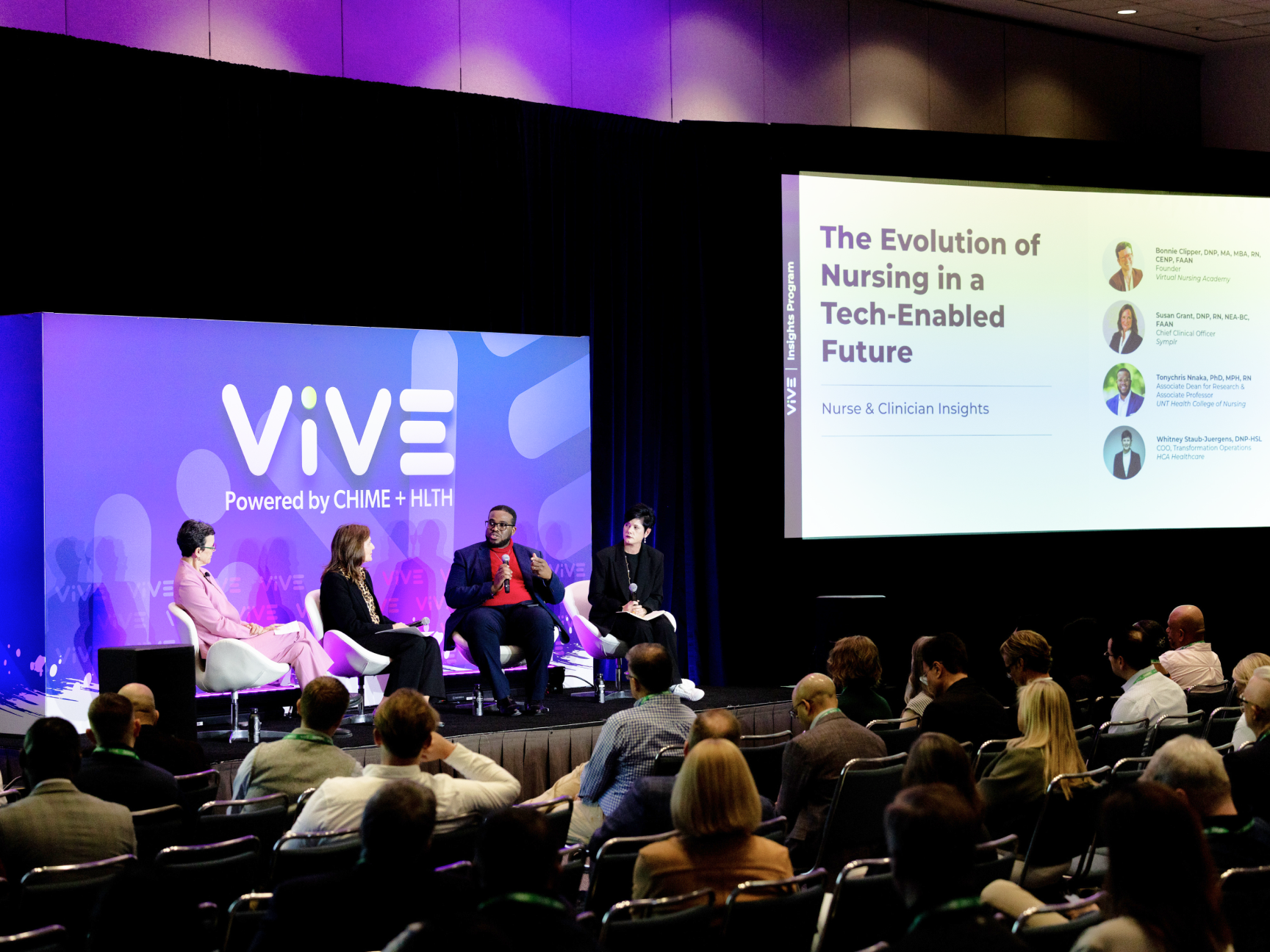
That point came through strongly in The Evolution of Nursing in a Tech-Enabled Future. Nurses described a familiar pattern: solutions are often designed around assumptions rather than close observation of real workflows. Founders may be trying to solve meaningful problems, but without spending time in the field, it is easy to misunderstand where the real friction lives and what a usable solution actually requires.
How to act on this:
Early-stage founders should not underestimate product discovery. It is what helps you validate the user journey, understand where the workflow actually breaks down, and design a product experience that supports adoption while also improving care delivery in practice. A product that looks compelling in a demo can still fail quickly if it does not fit the realities of clinical work.
More mature products are not exempt from this either. Clinical routines, staffing models, reimbursement pressures, and documentation expectations keep changing. That means healthcare products need constant iteration to stay relevant and useful in the day-to-day lives of clinicians, including nurses and physicians, who navigate those workflows every day.
A few good questions for product teams:
- Do you see clinicians as end users or as co-creators of the product experience?
- How often does a clinician participate in validating your roadmap?
- When was the last time your team observed real care delivery in the field?
- Are you grounding your product decisions in clinical reality, or letting AI-assisted research distance your team from the unit?
- Are you optimizing for adoption alone, or for a better care experience in practice?
Workflow-embedded AI is where healthcare is seeing real traction
AI was everywhere at ViVE, but the clearest signal from speakers was that the most valuable technology is often the least visible. The best tools are the ones that run quietly in the background, reduce friction, and avoid becoming yet another layer between patients and care teams.
That helps explain why AI scribes have become one of the most widely adopted and well-received categories in healthcare. Their value is easy to understand: they reduce documentation burden without asking clinicians to change how they deliver care. Instead of competing for attention, they give time back.
We met the team at Heidi, and their perspective felt especially aligned with what we heard across the event. The focus was on helping providers stay focused on the patient and keeping clinical judgment firmly in human hands. They are also launching Heidi Evidence, which expands that same philosophy into evidence-grounded clinical answers delivered within the flow of care.
Another strong example came from Cheristi Cognetta Rieke during Reimagining Nursing Workflows: Giving Time Back to Care. She shared a Mayo Clinic initiative that generates role-based patient summaries for nurses. The system pulls data from the EHR and tailors the output based on each nurse’s role and preferences. It is a good example of AI supporting human oversight by working in the background rather than interrupting the workflow.
AI agents were also a dominant theme across the event. They seemed most effective when applied to narrow, high-friction parts of healthcare operations, especially where the work is repetitive, rules-based, and operationally heavy. That was clear in examples such as Magical’s results in revenue cycle management, shared at the Building Better RCM Automation Workshop: What to Fix First, presented by Vanessa Moldovan.
But the conversation became less convincing when the pitch shifted from augmenting clinicians to replacing them. We heard repeated skepticism around ideas like “AI nurses” or chatbots positioned as substitutes for human judgment in care delivery.
A system may retrieve information quickly, but that is not the same as understanding context, reading nuance, or applying judgment that nurses and physicians develop through years of experience. These are highly trained professionals who have spent years building clinical expertise, and much of their value lies precisely in that accumulated experience and judgment.
How to act on this:
From a product perspective, one of the clearest opportunities right now is in workflow-embedded AI. That is where AI seems to deliver the most consistent value in real clinical settings: digital intake, summarization, clinical decision support, and other use cases that help clinicians and staff move faster without diverting attention from care.
A similar pattern showed up with AI agents. The strongest examples were not broad attempts to automate everything. They were focused applications aimed at complex but bounded operational tasks, especially in workflows with high volume, repetition, interoperability hurdles, and administrative friction. In other words, the current sweet spot seems to be narrow slices of complexity, not full substitution of human judgment.
That does not mean this is the ceiling for AI in healthcare. It is simply where the technology appears to be working best today for teams operating on the front lines. As product teams get closer to real clinical environments and build with a more profound understanding of how care is actually delivered, they will likely unlock broader and more ambitious applications. But that next wave will only be useful if it grows from a real understanding of workflows, not from a desire to force AI into places where it still feels intrusive, distracting, or premature.
Right now, the practical takeaway is this: start where AI can remove friction without becoming the elephant in the room. Prove value in the background first. Earn trust in narrow, high-impact moments. Then expand from there with much more confidence.
CMS is pushing interoperable experiences, not just interoperable systems
One of the most important signals at ViVE was that interoperability is no longer being framed only as a technical or regulatory challenge. With CMS technology leaders like Amy Gleason helping give visibility to this push, the message felt broader than compliance: policy is starting to shape real product direction.
That came through clearly in How CMS is Modernizing Healthcare, where Amy described the CMS Health Tech Ecosystem as a voluntary, standards-based effort designed to accelerate progress, rather than waiting years for regulation alone to take effect. Her framing was especially telling. Standards matter, but only if they come together in a way that works in practice.
The CMS Interoperability Framework is a good example of that shift. Rather than introducing another abstract layer of requirements, it lays out a playbook for turning alignment into execution across networks, EHRs, providers, payers, and patient-facing apps.
More importantly, it connects that policy agenda to practical user experiences that the market can actually build toward. CMS explicitly highlights categories such as Kill the Clipboard and Conversational AI Assistants as part of the early ecosystem it aims to accelerate.
The panel QHIN Beyond the Acronym, featuring Bob Watson of Health Gorilla alongside leaders from MedAllies, Surescripts, and Kno2, reinforced the infrastructure side of that story. QHINs were presented as one of healthcare’s most significant but least visible infrastructure investments. That matters because when networks operate at production scale, and data can move more reliably across state lines, payer types, and EHR environments, interoperability starts to look less like plumbing and more like an enabler of better product experiences.
That makes the interoperability conversation much more interesting. Moving data more cleanly across systems is only part of the opportunity. The bigger win is using interoperable data to unlock better product experiences. That includes simpler intake, more portable records, smarter follow-up, and AI-powered support that is grounded in actual patient context rather than generic prompts.
This is where the conversational layer becomes especially relevant. CMS is treating conversational AI as a patient-facing interoperability use case: assistants that, with consent, can securely access relevant health information and use it to deliver personalized support, while clearly distinguishing educational content from clinical guidance.
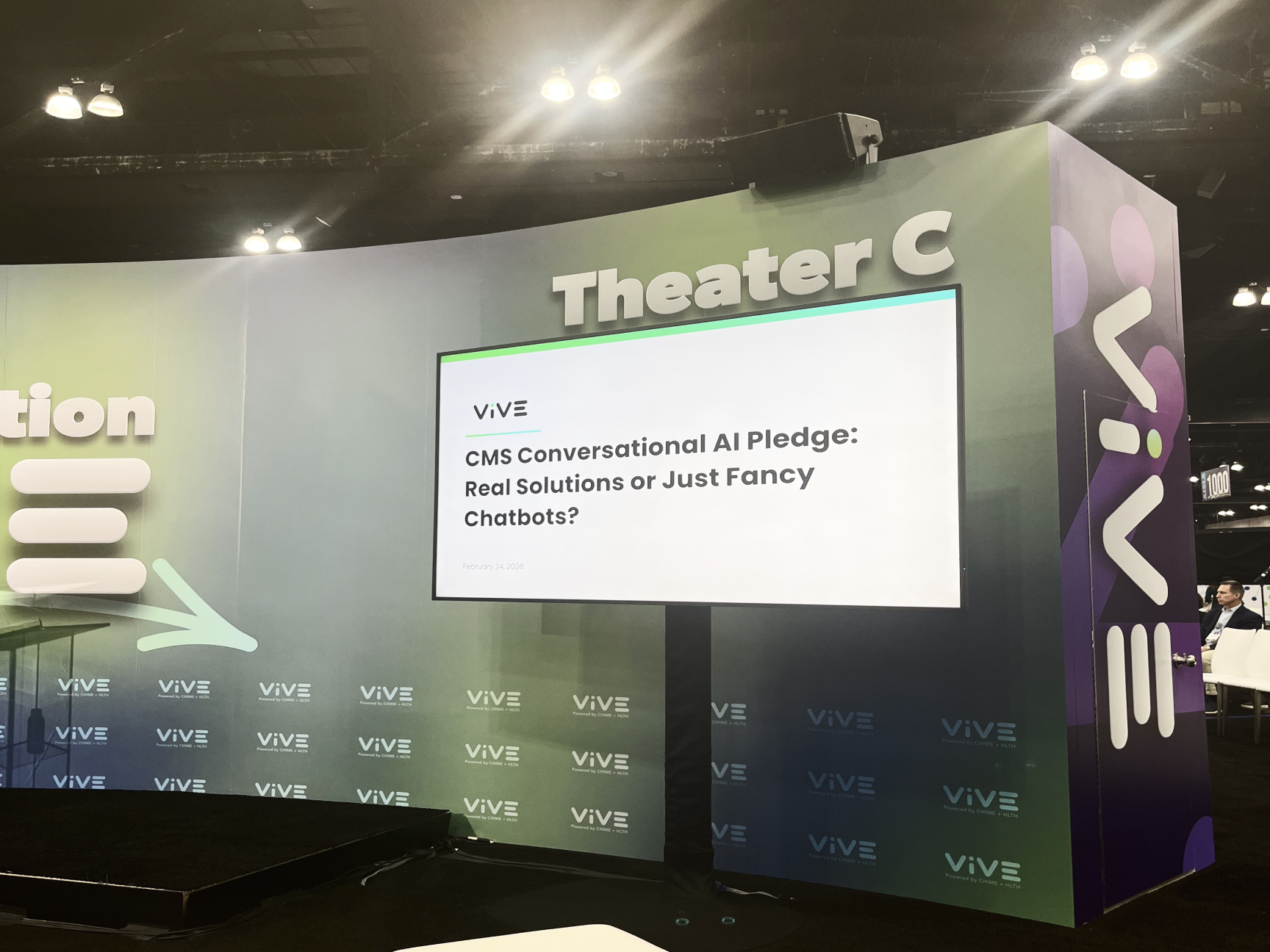
That was also the core tension behind Sara Zywicki’s session, The CMS Conversational AI Pledge: Real Solutions or Just Fancy Chatbots. The title itself captured the market’s skepticism well. The real test is whether conversational AI is connected to enough real patient context to be genuinely useful, not just impressive in a demo.
In other words, interoperability is a means to an end. It is the infrastructure that makes more useful, more contextual, and more trustworthy digital health products possible.
How to act on this:
The strongest near-term opportunities are those that turn CMS-aligned data flows into features that patients and care teams can actually feel. One of the clearest starting points is intake. As we explored in this previous article, CMS is signaling that repetitive forms, fragmented histories, and portal-heavy check-in flows are undoubtedly the kind of friction digital products should remove.
Vinta’s open-source Kill the Clipboard library was built for that shift, helping teams implement SMART Health Cards and SMART Health Links so patient data can be shared via QR codes and structured FHIR-based flows rather than paper forms and manual re-entry.
A second opportunity arises after the data has been retrieved. In this article we published on building patient-facing apps aligned with the CMS Interoperability Framework, we argue that interoperability becomes much more valuable when it powers understandable, patient-facing experiences.
That includes unified records, consented data sharing, and AI-assisted summaries or explanations that help patients understand what happened in a visit and what comes next. To make this more tangible, Vinta built Topology Mobile, an open-source app that demonstrates this end-to-end patient journey. The app is built on Topology’s healthcare platform and uses the SMARTerFHIR toolkit to enable standards-based SMART on FHIR authentication and secure connections to systems like Epic and other EMRs.
On top of that foundation, the demo layers consent flows, unified clinical records, and an AI assistant that works over structured FHIR data to generate patient-friendly explanations and summaries.
Point solutions will not carry transformation for rural and community hospitals
ViVE reinforced a useful contrast between two very different healthcare realities. In Too Big to Be Basic: When Large Scale Turns Simple Into Complex, leaders from CHRISTUS Health, SSM Health, and HCA Healthcare highlighted a familiar enterprise dynamic: these are highly strategic environments where health IT decisions are made cautiously, with many stakeholders involved, strong internal specialization, and a low tolerance for operational disruption.
But while the enterprise challenge is relevant, the reality described by rural and community hospitals felt harder to ignore. In When Small Gets Tough: Digital Health in Resource-Thin Environments, it became clear that smaller hospitals and community-based systems face a different kind of complexity.
Leaders in those settings often operate with limited staff and budgets, and a small number of people who carry a wide range of responsibilities across technology, operations, and care delivery. Their organizations may be smaller, but the challenges are not: they still need to support complex workflows, serve broad geographic areas, and improve access to care with limited internal capacity for transformation.
In those settings, digital health is not optional. Telehealth, better care coordination, remote monitoring, and stronger operational visibility can be essential to extending care across distance and scarcity. But that urgency also makes the implementation challenge more acute. It is challenging to modernize quickly when teams are already stretched thin, hiring specialized talent locally is difficult, and the infrastructure required to support change is often incomplete.
That tension came through clearly in $50 Billion for Rural Health Transformation: Is This the Tipping Point? The panel focused on CMS’s Rural Health Transformation Program, a five-year, $50 billion federal investment designed as startup capital to help states implement new technologies, infrastructure, and care models for rural healthcare delivery.
The discussion made clear that this is not just a funding story. It is an execution story. The gap is no longer between vision and policy. It is between what states and providers want to do, and what they are actually ready to implement. One of the clearest takeaways was that the messiness here is structural, not accidental: every state has different laws, procurement rules, political dynamics, and provider landscapes. There is no repeatable national playbook.
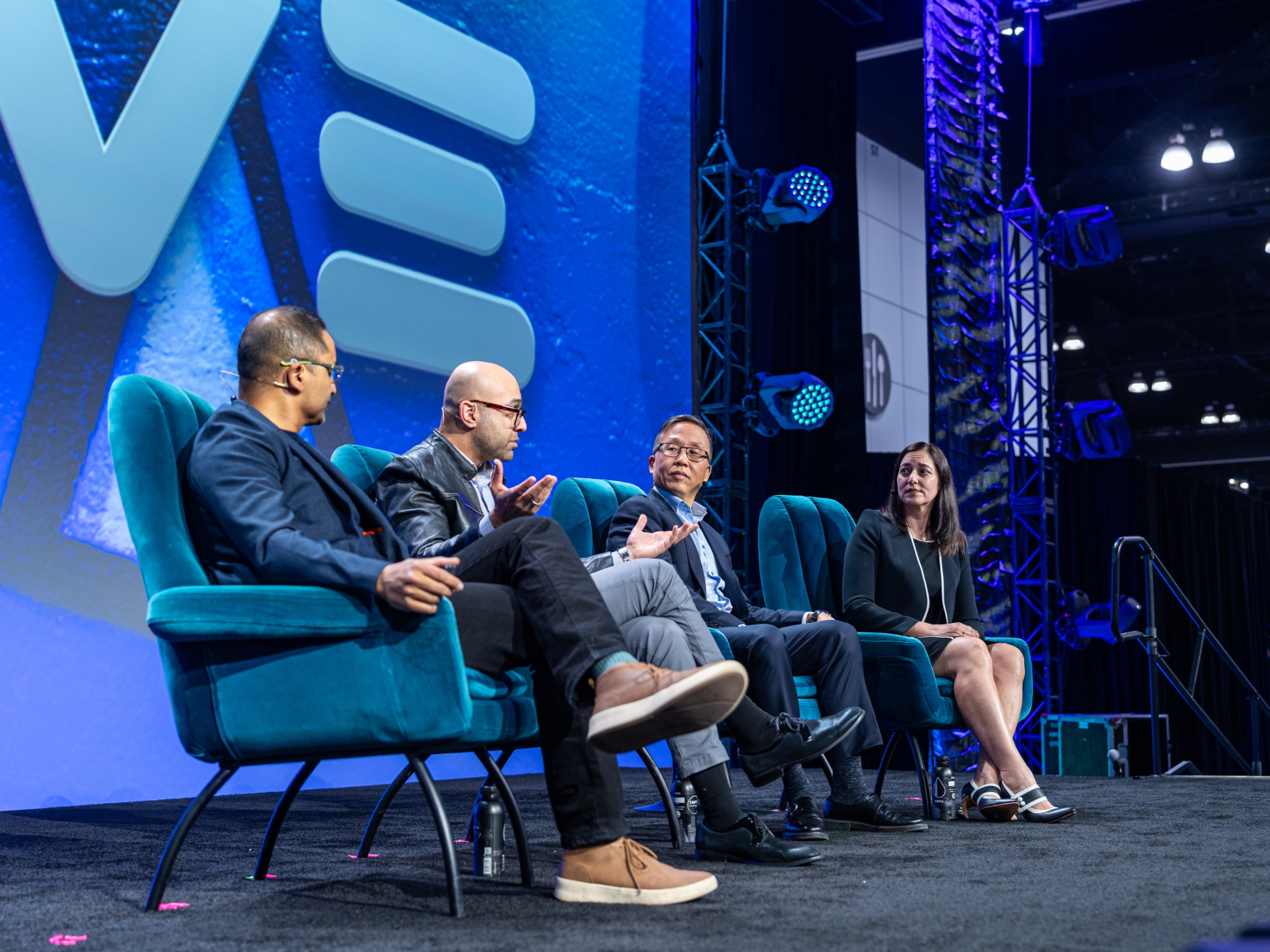
One of the most important ideas from the panel was not a specific technology, but a model: independence through interdependence. In practice, that meant smaller hospitals preserving local autonomy while partnering to share infrastructure, resources, and execution capacity. The strongest path forward pointed to integrated solutions that combine technology, infrastructure, integration, implementation, and clinical workflows, rather than a patchwork of disconnected tools that providers and states struggle to operate in practice.
That is what makes custom software especially relevant in this context. These organizations are facing unique transformation goals, specific operational realities, local constraints, varied partnership structures, and uneven infrastructure. A generic product may solve one problem in isolation, but still fail to fit the broader model needed to make change stick. What this panel made clear is that success depends on solutions that are both integrated and tailored, designed to work within the actual environment where care is being delivered. As one speaker put it, the market needs to give these stakeholders the “easy button.” In practice, that means less implementation friction, with no tradeoff in quality.
How to act on this:
For rural and community hospitals, digital transformation usually stalls because the path to execution is too heavy for the reality on the ground. That is why progress in these environments often depends less on having the perfect product and more on having the right starting point.
The most effective first moves are typically the ones that solve a pressing operational problem and are easy to implement. When there is no bandwidth for a larger digital transformation initiative, bringing in external support to help scope the first phase well, move faster, and build in a way that strengthens internal capability over time can be a strong path.
That is also the kind of work Vinta can support. In a recent collaboration with Medplum, Vinta helped a regional hospital network in Kansas build a real-time patient flow and transfer visibility application designed to improve operational coordination across multiple facilities.
The system gave teams a centralized view of bed availability, incoming transfers, and patient status, while structuring transfer workflows in FHIR and enabling real-time updates across the operation. It is a good example of modernization work, one that makes an existing care environment easier to operate instead of layering on yet another disconnected piece of software.
The long-term goal should still include building internal capability and investing in the local workforce. But for many hospitals, the most realistic first step is to work with a partner who can help them move faster, reduce implementation burden, and design a solution that actually fits the broader environment they operate in.
A new wave of healthtech companies is making clinical systems easier to build
As a company of expert developers, Vinta did not walk the show floor looking only for polished messaging or broad platform ambition. We looked at it the way builders do: which companies are actually turning difficult healthcare layers into something more programmable, more composable, and more realistic to build on.
Through that lens, three companies stood out: Metriport, Awell, and Stedi. They sit in different parts of the stack, but each is focused on a part of healthcare that has long been painful: fragmented medical data, messy care operations, and payer transaction complexity.

Metriport stood out for its direct approach to retrieving and aggregating external records. Its platform is built around a universal API for clinical data, open-source foundations, connectivity to national exchange networks like CommonWell and Carequality, and tools for record summaries, normalization, and de-duplication. That matters because access to historical patient data remains one of the most frustrating aspects of interoperability. Too often, it depends on fragmented network access, brittle custom work, and long implementation cycles.
Metriport’s approach suggests a different direction: making access to outside records feel more like modern product infrastructure and less like an endless integration project. That is also what made Vinta’s earlier Medplum-Metriport integration meaningful in practice. It showed how this capability can fit naturally into a FHIR-native architecture rather than remaining a separate interoperability burden.
Awell operates at a different layer of the stack. Its technology is centered on care orchestration: giving teams a structured way to design, automate, and run clinical workflows without pushing all that complexity into the EHR. That matters because care operations are usually fragmented across spreadsheets, forms, reminders, handoffs, and manual coordination. Awell brings those moving parts into a more intentional operational layer, with workflow logic, role assignments, triggers, scheduling, and patient-facing interactions working together.
That is part of what makes Awell such a relevant partner for Vinta. In our technical work with the platform, we explored how those orchestration capabilities can connect with structured clinical data, FHIR synchronization, and real product workflows. That kind of architecture gives teams a clearer way to automate care delivery without collapsing every operational concern into the system of record.
Stedi brings a cleaner, more modern approach to one of the least developer-friendly layers in healthcare: payer transactions. Publicly, it positions itself as a programmable healthcare clearinghouse, with API-first, JSON-native interfaces for eligibility, claims, enrollments, and related workflows.
That framing matched what we saw in conversations with their team at the booth. Stedi makes this part of the stack feel much closer to programmable infrastructure. It is not trying to be a full revenue cycle platform with heavy embedded logic. Instead, it offers a more flexible transaction layer for teams that want greater control over how payer connectivity is built into their products.
Taken together, these companies point to a broader shift in healthtech infrastructure. Some of the most interesting products on the floor were not trying to do everything at once. They were taking especially painful parts of the stack and making them easier for technical teams to understand, integrate, and work with. For teams building in healthcare, that kind of clarity is valuable.
How to act on this:
If any of these technologies caught your attention, the barrier to exploring them is relatively low. Stedi offers a sandbox for testing transaction flows, Metriport provides sandbox access and developer docs, and Awell offers a Bootcamp designed to help teams get through those early implementation steps with more structure and support.
If you are struggling with one of these critical layers in your product or operations and are not sure which integration path or technology makes the most sense, Vinta’s team can help translate those pain points and map the solutions that best fit your product vision, engineering context, and roadmap.
We are strong believers in not reinventing the wheel, and in leveraging as much as possible from open-source tools and existing partners so clients can get to value faster. That is part of why these solutions stood out to us, and why we keep investing in expanding the integrations and partnerships we work with through our Healthcare Integration & Interoperability services.
Bonus: how to get more out of ViVE
Whether you are attending or exhibiting at future editions, the experience gets much more valuable when your team is clear in advance about why you are there. That means defining objectives early, mapping the companies you want to visit, the people you hope to meet, the conversations you would like to have, and the sessions you do not want to miss. ViVE rewards preparation.
The first day has a particular rhythm. With no show floor yet, it is the best moment to focus on talks and more intentional meetings. There is less noise competing for your attention, which makes it easier to protect time for sessions and have deeper conversations.
The second and third days are different. Those are the strongest show floor days, and the floor should be a major priority. That is when it makes the most sense to visit booths, understand how companies are positioning themselves, explore products more closely, and start conversations with potential partners or prospects. Meetings can still happen, but shorter ones tend to work better on those days.
The last day plays another role. The floor is usually quieter, which makes it easier to walk around with more focus, revisit companies, and consolidate what stood out from the previous days. It is also a good time to use sessions like the Health Tech Showcase and the Startup Pitch Competition as a market pulse check and a way to spot new ideas.
And then there is everything that happens outside the official agenda. Side events and after-hours gatherings are valuable for a different reason. The conference itself is where you execute against the goals you planned. The after-hours events are where unexpected conversations, new relationships, and useful surprises can emerge.
Go in with a plan, but leave room for serendipity. The structure helps you use your time well. The flexibility is what makes the event memorable and often more valuable than expected.
Closing thoughts
ViVE 2026 made one thing clear: healthtech is getting more ambitious, but the bar for what actually works is getting higher.
TL;DR
- Clinical products get better when clinicians are involved early, not treated as downstream users after the roadmap is already defined.
- AI is proving most useful in healthcare when it operates quietly in the background and supports care teams rather than competing with them.
- Interoperability is starting to shape real product decisions, especially as policy pushes turn into concrete patient-facing use cases.
- Rural and community hospitals need integrated, tailored, and realistic solutions to implement within constrained operating environments.
- A new generation of healthtech companies is making hard layers of clinical systems more programmable and more accessible to technical teams.
Taken together, these five points describe the same shift. Healthcare software is becoming less about surface-level innovation and more about execution quality. The products that matter are the ones that fit clinical reality, reduce operational burden, connect cleanly to the broader ecosystem, and give teams a practical path from idea to implementation.
That is the lens Vinta brings to this space. We work at the intersection of product, engineering, interoperability, design, and real delivery constraints. The patterns that stood out at ViVE are the same ones we see across our work with healthcare teams: better discovery, stronger infrastructure decisions, and the technical flexibility to support real-world complexity. But none of that is meaningful on its own. The real test is whether those choices improve care where it is actually delivered.
For us, that is what makes healthcare software credible. It has to work for providers, support patients more effectively, and improve how care actually happens.


