5 things we took home from PlumCon 2026

.webp)
.webp)
I landed in San Francisco on September 3 for PlumCon, Medplum's yearly conference.
Nine o'clock, one room, breakfast, and people who'd flown in from all over already trading notes with whoever was standing next to the coffee.
By the time we broke for tacos before the afternoon sessions, half the room seemed to know each other's projects by name.
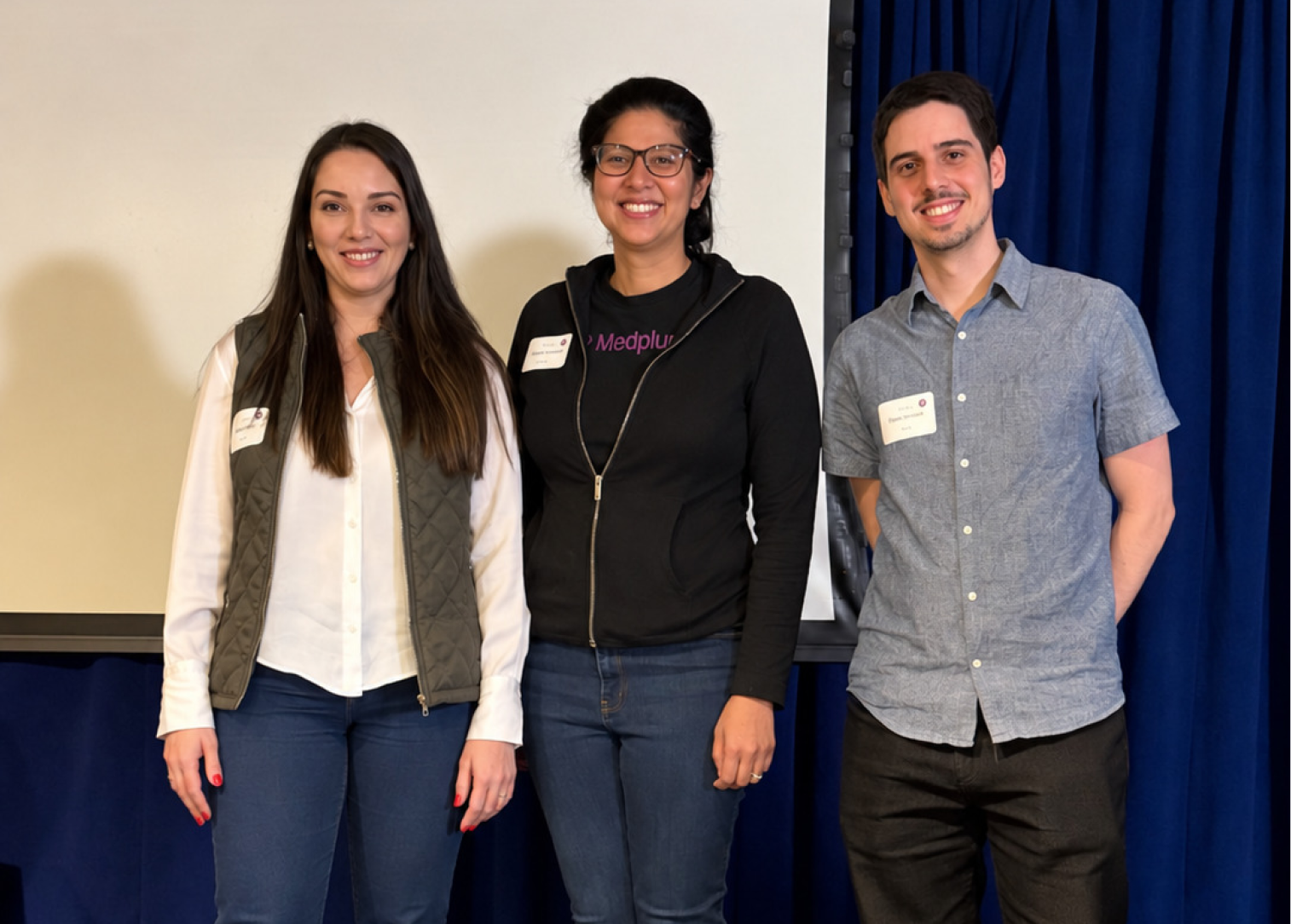
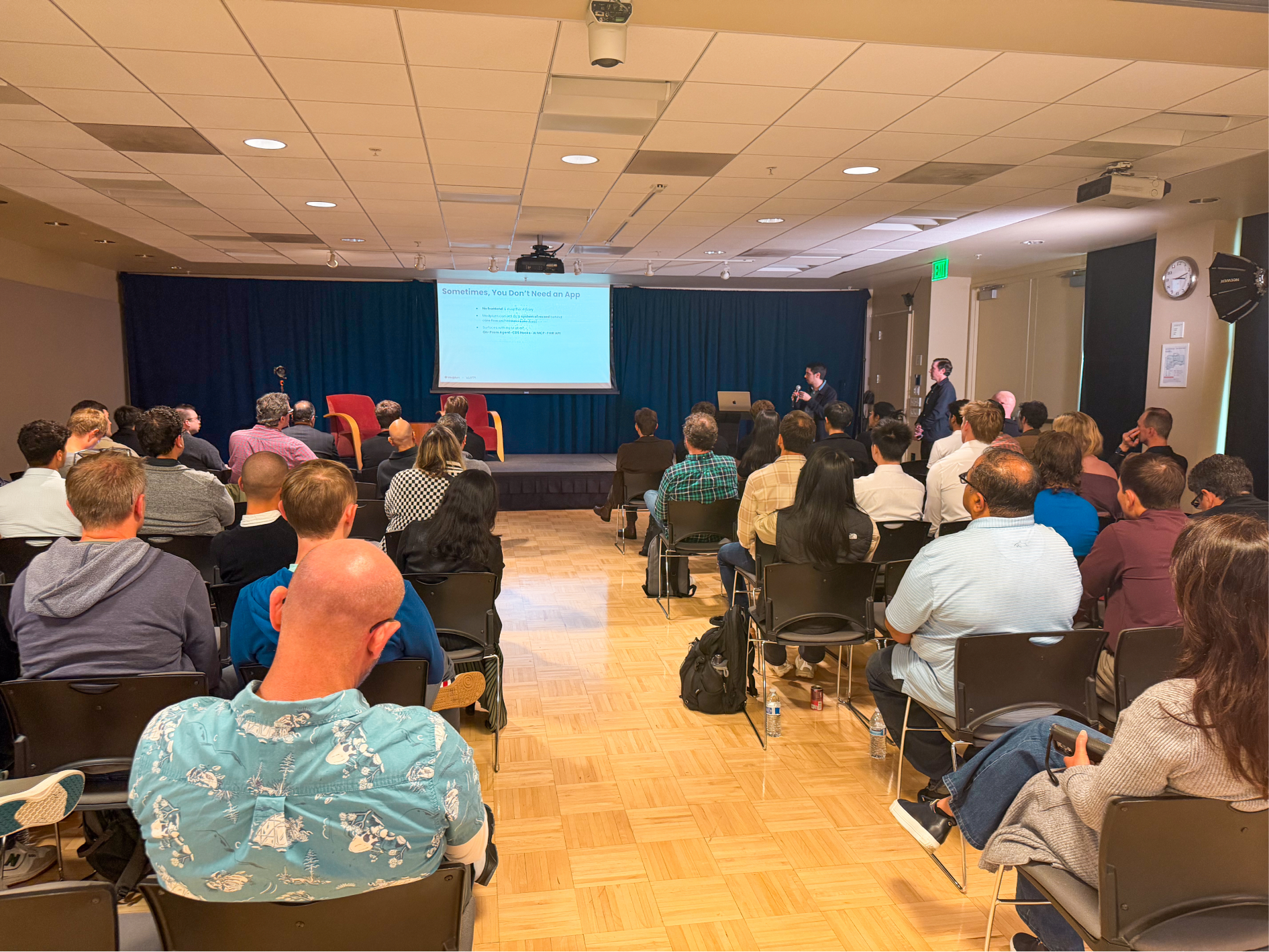
That's PlumCon in one sentence: a one-day gathering built for a community that's grown into hospital networks, YC-backed startups, and a Stanford classroom. Flávio Juvenal took the stage that day to share what we've learned across nine Medplum implementations (you can read the full talk here), but the rest of the day is what I keep coming back to.
Here's what stuck with me.
1. The scale behind Medplum
Cody Ebberson's keynote opened with a number that says a lot about where Medplum is right now: 5.7 billion HTTP requests and nearly 25 billion FHIR interactions in the last year, on the infrastructure Medplum directly controls alone.
Because Medplum is open source, Cody was upfront that nobody actually knows the real number. NPM downloads are up 10x year over year, Docker pulls have tripled, and the platform now has 207 open-source contributors against a team of 20 employees.
One of those contributors isn't even a person. Ranked third by contribution count is AutoFixBot, an automated bot that ships small fixes and dependency bumps. Cody's joke about it got a laugh, but it made a real point too. Medplum's roadmap runs on a community.
The roadmap for the year ahead follows that same logic:
- a marketplace to extend Medplum (one-click install for integrations, bots, and workflows)
- a control plane to operate it at scale (deployment, upgrades, observability, and sharding, managed as one system instead of piece by piece as deployments grow)
- And Medplum Insights to help teams actually make sense of the FHIR data they've been told to "just collect" for years.
CMS's "Kill the Clipboard" initiative got its own moment in the keynote too. Cody shared a photo from an actual funeral CMS held for the clipboard, coffin included, as part of the campaign.
It's a topic close to home for us. Vinta built and open-sourced Kill the Clipboard, our own library for Smart Health Cards and Links, as part of the same push.
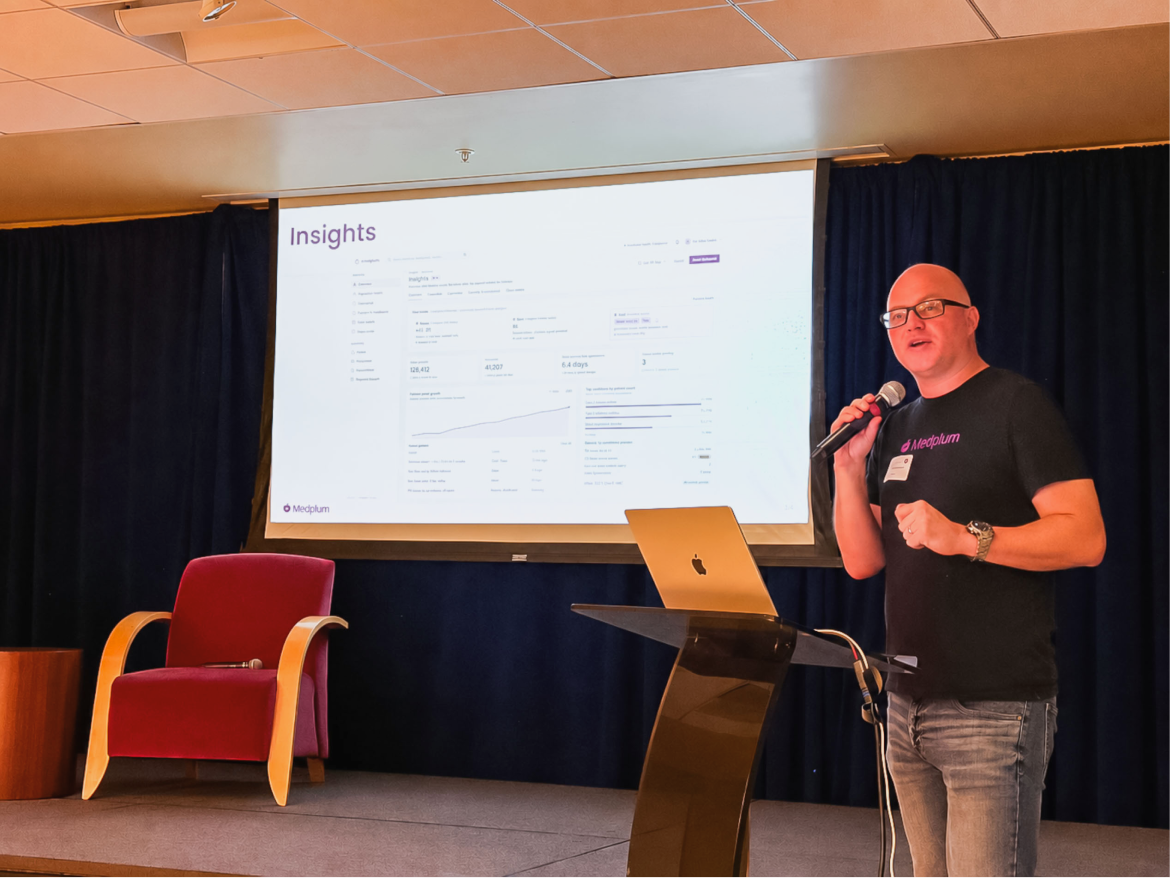
Cody's framing of the goal matched ours: nobody wants to fill out the same medical history for the tenth time, and health information should travel with the patient instead of staying trapped in whichever system captured it first.
2. The future of healthcare software is still wide open
Stuart Parmenter, former CTO of One Medical, made the argument that got the most nods around our table: standards only work when the people implementing them are actually in the room.
Real feedback from real implementations, including the moments something didn't work and had to change, is what makes a standard genuinely usable.
He framed where healthcare software is right now as a kind of 2003 moment. We still have faxes. But the building blocks, in his words, are finally in place, and the open question is what gets built on top of them next: "what is the Gmail, the Google Maps, the YouTube" of this era.
Asked directly where he'd bet on healthcare technology going next, Stuart didn't try to predict a specific breakthrough. What he came back to instead was patient autonomy: technology that helps people take a little more ownership of their own health and make slightly better choices day to day, supporting the judgment clinicians already build over years of experience.
3. Scaling Medplum means splitting it up, not just growing it
Scaling Medplum toward 100 million patients was the whole subject of Matt Long and Maddy Li's talk, and the core idea is sharding: instead of every customer sharing one large database, each organization gets its own. A "vanilla," unoptimized Medplum cluster is already handling around 10 million patients in the wild. Sharding is what gets that further.
The reasons stood out to us more than the mechanics. Physical data isolation, a real requirement across plenty of healthcare compliance regimes, falls out naturally once each tenant has its own shard.
Rate limits get more generous once there are no more database "neighbors" to protect. And a security question from the audience got a genuinely reassuring answer: if an attacker compromises one organization's client application, the blast radius stays contained to that one shard. Other organizations' data isn't reachable through those credentials, and the compromised organization is still subject to its own rate limits.
It also unlocks scale most healthcare software never has to think about: a single Medplum cluster serving as an EMPI (enrollee master patient index) across a population the size of California, over 40 million people, or supporting a payer's Medicare or Medicaid roster where any patient could show up at any time.
Scaling Medplum this way, sharded and isolated by tenant, is what makes that kind of population-level infrastructure possible in the first place.
4. Academia is shipping to production faster than ever
Vishnu Ravi, from Stanford Biodesign, walked through CS342, the course he's run for six years that pairs clinicians with computer science, design, and business students to take a real clinical problem all the way to a deployable prototype, in one or two quarters.
What stood out to us is that Medplum has quietly become the thing that makes that timeline possible. Before, getting students to properly learn FHIR, coding systems, and access control inside a 10-week quarter left MVPs that worked but needed months of extra engineering afterward. Now the course has a FHIR data-modeling agent that walks students straight from a clinical need statement to a working Medplum integration, hosted or self-run.
One team from the course built a product, went through Y Combinator, raised funding, and was later acquired, all starting from a class assignment.
The program has also been replicated at Chalmers University of Technology and Sahlgrenska University Hospital in Sweden, where, as Vishnu put it, the whole design-thinking process was the part that had never existed there before.
It's a good reminder of who's actually building on top of this ecosystem, and it's a wider group than funded startups: students with a semester and a clinical mentor are shipping real things too.
5. The real value of an ecosystem is the exchange
Honestly, a lot of our favorite parts of the day happened in the hallway.
We caught up with Stedi, one of the event's sponsors, Junction, and Awell, and talked with people who came mainly to trade notes on what they've built, what broke, and what they're seeing next.
.webp)
That's also where Flávio's talk fit in for us: nine implementations' worth of what we'd build once and reuse, shared with a room full of people doing the exact same kind of work, and picking up their own version of the same lessons in return.
Seeing our own experience become part of that conversation, on stage and off, was a good reminder of what this kind of event is actually for.
Bonus: it's ultimately about people
The session that made the room go quiet was Yang Su's session on Seen Health and PACE care.
Delivering care through a genuinely multidisciplinary team, spanning professionals across eleven different areas, is complex in a way that's easy to underestimate.
What impressed us was seeing technology actually built to make that complexity workable: Seen Health brings multiple professionals together around the same patient record, using simple voice and shared workflows to support collaboration across the care team.
That's more time and space for care teams to focus on what actually matters. Behind every workflow, every API, and every FHIR resource, there's a human being whose experience the whole thing is supposed to make better.
Why we'll be back
This is a community building healthcare software around the same bet we've made ourselves: open source, open standards, and FHIR as the foundation rather than an afterthought. We left with more open conversations than closed ones, which is exactly what we'd hoped for. See you there next year!
.webp)



.webp)
.webp)



%201.webp)


